FRP Cable Tray: Types, Benefits, Applications & Installation Guide
FRP cable trays are used to support, organize, and route electrical cables in industrial, commercial, infrastructure, and utility installations. FRP stands for Fiber Reinforced Plastic, a composite material known for its lightweight construction, mechanical strength, corrosion resistance, and electrical insulation properties.
Cable routing can become challenging in environments exposed to moisture, chemicals, humidity, or outdoor conditions. In such installations, FRP cable trays can provide an alternative to conventional metallic cable support systems. They can help maintain organized cable routes while reducing concerns related to rust and corrosion.
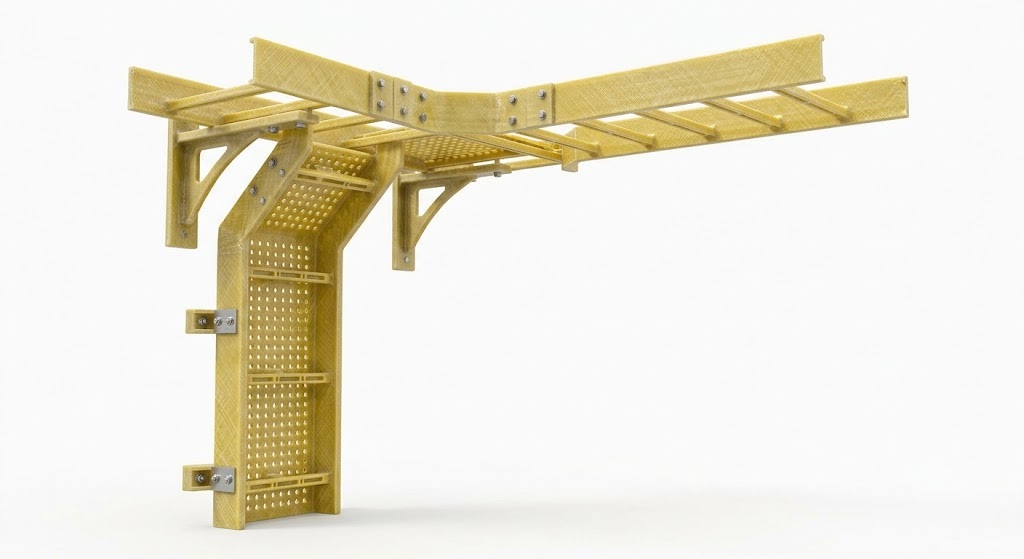
Selecting the right FRP cable tray depends on the cable type, load, installation environment, available space, support arrangement, and future requirements.
What Is an FRP Cable Tray?
An FRP cable tray is a cable management system manufactured from Fiber Reinforced Plastic. It provides a structured pathway for supporting and routing electrical, power, control, instrumentation, and communication cables.
FRP cable trays are available in different designs to suit different installation requirements. Their non-metallic construction makes them suitable for applications where corrosion resistance and electrical insulation are important considerations.
An FRP cable tray can help with:
- Keeping electrical cables organized
- Providing continuous cable support
- Improving cable accessibility
- Allowing ventilation around cables
- Reducing exposure to corrosion
- Making inspection and maintenance easier
- Providing space for future cable additions
Understand the Different Types of FRP Cable Tray
FRP cable trays are available in different configurations. The appropriate type depends on the cable arrangement, load, ventilation requirements, and installation conditions.
FRP Ladder Cable Tray
Ladder cable trays consist of two side rails connected by horizontal rungs. Their open structure provides ventilation around the cables and allows convenient access during installation and maintenance.
They are commonly used for:
- Heavy power cables
- Industrial plants
- Power distribution systems
- Manufacturing facilities
FRP Perforated Cable Tray
Perforated FRP cable trays have openings along the tray base and sides. They provide continuous support beneath cables while allowing airflow through the openings.
They can be suitable for power, control, instrumentation, and automation cables where both cable support and ventilation are required.
FRP Raceway Cable Tray
Raceway-style FRP cable trays provide a more enclosed or channel-like pathway for cables. They can be considered where cables require additional protection from surrounding conditions.
They may be used for communication, control, electrical, and instrumentation wiring in commercial and industrial installations.
Consider the Benefits of FRP Cable Trays
The material properties of FRP make these cable trays useful for demanding environments. Before selecting a tray, it is important to understand how these properties relate to the installation.
Corrosion Resistance
FRP does not rust like conventional steel. This makes it useful in locations where moisture, chemicals, or corrosive substances may affect metallic cable trays.
Lightweight Construction
FRP cable trays are relatively lightweight compared with many metallic alternatives. This can make transportation, handling, and installation more convenient.
Electrical Insulation
FRP is a non-conductive material. Its electrical insulation properties can be useful in installations where a non-metallic cable support system is required.
Moisture Resistance
FRP trays can be suitable for humid and moisture-prone environments. They are commonly considered for outdoor, wastewater, marine, and industrial applications.
Easy Cable Management
The open structure of ladder and perforated designs allows cables to be arranged and accessed conveniently. This can simplify inspection, maintenance, and future cable additions.
Check the Required Specifications
Before selecting an FRP cable tray, its dimensions and construction should be matched with the cable requirements.
Important specifications include:
| Specification | Typical Details |
|---|---|
| Material | Fiber Reinforced Plastic |
| Tray Types | Ladder, Perforated, Raceway |
| Standard Length | 3 m / 6 m |
| Available Widths | 50 mm to 900 mm |
| Side Rail Depth | 25 mm to 150 mm |
| Wall Thickness | 2.5 mm to 8 mm |
The actual tray dimensions should be selected according to the number and size of cables, total cable weight, support span, and project requirements. Product specifications may vary according to the manufacturer and application.
Select the Right FRP Cable Tray Size
Tray dimensions should be selected according to the cables that will be installed. A narrow tray can create overcrowding, while an unnecessarily large tray can use additional space and increase project costs.
Before selecting the size, consider:
- Number of cables
- Cable diameter
- Total cable weight
- Required cable spacing
- Tray width
- Tray depth
- Support spacing
- Available installation space
- Future cable requirements
Consider the Installation Environment
The surrounding environment plays an important role in FRP cable tray selection. Different industrial and commercial locations can expose trays to different levels of moisture, chemicals, dust, and temperature.
Before installation, consider:
- Indoor or outdoor location
- Moisture and humidity
- Chemical exposure
- Dust levels
- Temperature conditions
- Possibility of mechanical impact
- Corrosive substances
- Required maintenance conditions
FRP cable trays can be particularly useful in chemical plants, wastewater treatment facilities, outdoor industrial areas, and other locations where corrosion resistance is important.
Plan the FRP Cable Tray Installation
Proper installation helps maintain continuous support along the cable route. The route should be planned before installing the tray so that equipment locations, cable entry points, bends, and support positions are considered.
The installation process generally includes:
- Planning the cable route
- Selecting the required tray size
- Marking support locations
- Installing suitable supports
- Positioning straight tray sections
- Connecting bends and other accessories
Support spacing should be determined according to the tray design, cable load, span, and project specifications.
Consider Cable Separation and Ventilation
Industrial installations can contain power, control, instrumentation, automation, and communication cables. Depending on the project requirements, different cable groups may need to be routed separately.
Proper separation can help keep cable systems organized and make identification and maintenance easier.
Ventilation should also be considered when selecting the tray design. Ladder and perforated FRP trays provide an open structure that allows airflow around cables. The appropriate configuration should be selected according to cable type and installation conditions.
Select Suitable Accessories and Supports
A complete cable tray installation normally requires more than straight tray sections. Accessories help create continuous cable routes around changes in direction and differences in elevation.
Depending on the installation, accessories may include:
- Bends
- Tees
- Reducers
- Covers
- Connectors
- Hangers
- Supports
- Mounting hardware
Accessories should be compatible with the selected FRP cable tray and should provide appropriate support throughout the cable route.
Applications of FRP Cable Trays
FRP cable trays can be used across a wide range of industrial and commercial applications because of their lightweight, corrosion-resistant, and non-conductive construction.
Common applications include:
Chemical Industries
FRP trays can be used for routing power, control, and instrumentation cables in areas where chemical exposure is a concern.
Water and Wastewater Plants
Their corrosion-resistant properties make them suitable for cable routing around pumps, control panels, treatment systems, and processing equipment.
Power and Energy Projects
FRP cable trays can support electrical and control cables in power generation and energy-related installations.
Industrial Automation
They can provide organized routes for control cables, instrumentation wiring, sensors, and automation systems.
Outdoor Infrastructure
FRP trays can be considered for outdoor utilities and infrastructure projects where cables may be exposed to moisture and changing weather conditions.
Choose a Suitable FRP Cable Tray Supplier
When selecting an FRP cable tray supplier, businesses should consider more than product price. The tray should match the technical requirements of the project.
Important factors include:
- Material quality
- Tray type
- Available sizes
- Cable load capacity
- Corrosion resistance
- Installation requirements
- Accessories
- Support arrangement
For businesses looking for FRP Cable Tray Manufacturers in Pune, working with an experienced supplier can help in selecting a suitable cable management solution according to the project requirements.
Why Choose Mauli Techsol for FRP Cable Tray Solutions?
MauliTechsol provides FRP cable tray solutions for electrical, industrial, infrastructure, automation, and commercial applications. The company offers different FRP tray configurations for cable management requirements.
Customers can evaluate cable tray options based on:
- Required tray type
- Material and construction
- Tray dimensions
- Cable load
- Installation environment
- Support arrangement
- Required accessories
- Future expansion requirements
Selecting the appropriate FRP cable tray at the planning stage can help create an organized and accessible cable management system.
Conclusion
FRP cable trays provide a practical solution for supporting and routing electrical cables in industrial and commercial installations. Their lightweight construction, corrosion resistance, electrical insulation, and suitability for demanding environments make them useful for various cable management applications.
Choosing the right tray requires consideration of cable quantity, cable weight, tray dimensions, installation environment, support spacing, ventilation, and future expansion.
Different designs can be selected according to the application. Ladder trays provide an open and ventilated structure, perforated trays offer continuous cable support with ventilation, while raceway-style trays provide a more structured cable pathway.
For businesses looking for FRP Cable Tray Manufacturers in Pune, consulting an experienced supplier can help identify a cable tray system that matches the technical and practical requirements of the project.